
Understanding the Common Module HSC Rubric

As your first assessment task in Year 12, the Common Module is your opportunity to demonstrate the skills and analytical depth you’ve developed over the years, while establishing a clear benchmark for your strengths and areas to refine moving forward. It’s also worth a shocking 40% at the HSC level, double the weighting of the other modules as it is assessed both through an essay and short answer response.
It’s completely natural to feel daunted - the pressure of knowing that every single mark now contributes to your final results, combined with an increased HSC workload, can feel overwhelming at first.
To help you start strong and achieve your best, here’s a quick guide on how to use the Common Module rubric effectively to prepare for your first assessment task.
1) The Importance of the Rubric
If the rubric hasn’t become your best friend yet, then there is no better time than now. Often, students ignore the rubric and jump straight into the text without knowing what they should consider important and what to highlight. This leads to overcrowded quote banks and untidy notes from classes, which pile up as assessment dates close in.
With the majority of preparation leading up to exams being driven by teachers, not understanding the purpose behind why certain quotes are chosen or specific themes are more relevant than others causes texts to become confusing and analysis to be rote learned instead of fully grasped by students.
To prevent this, the rubric provides insight into the specific aspects of a text that are valued by NESA and, thus, are taught within schools.
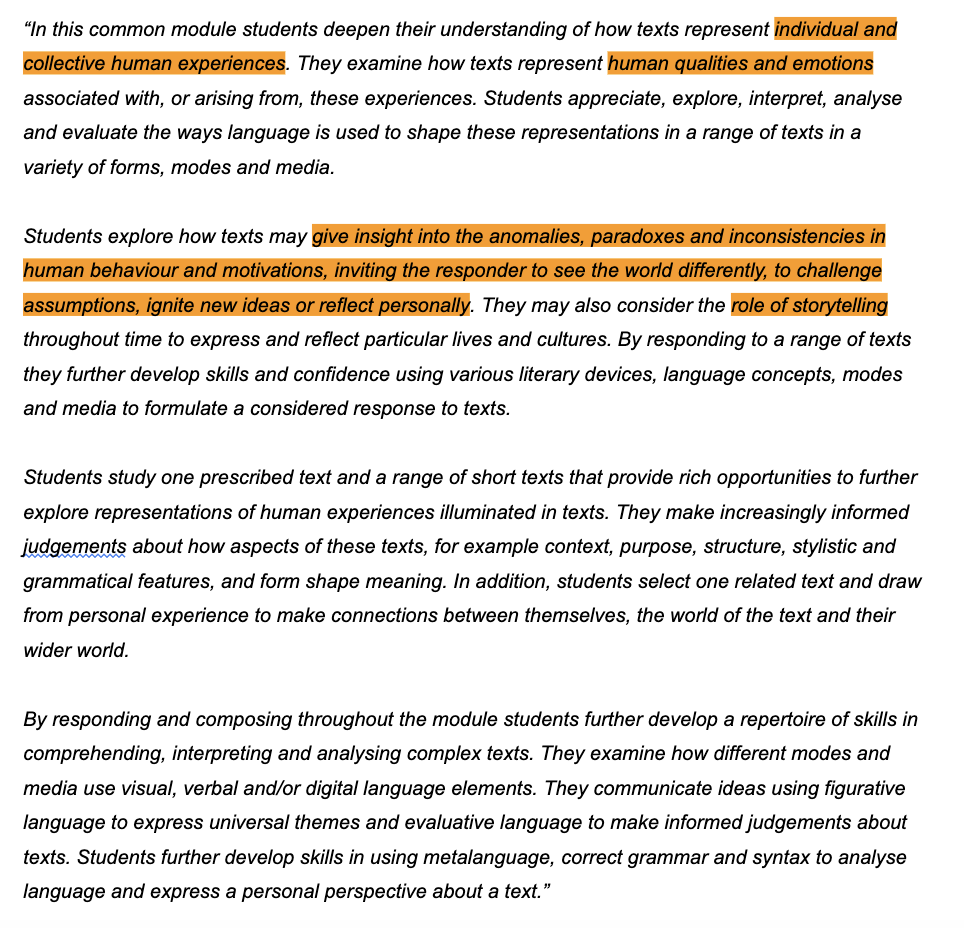
To utilise the rubric in guiding your studies, here is the HSC Common Module Rubric with key words highlighted:
2) Breaking Down the Rubric
The key aspects of the rubric include:
a. Individual and collective human experiences and the human qualities and emotions represented
Individual and collective human experiences are a fancy way of categorising all the events and interactions in a text. Individuals being singular characters often presented to readers through a monologue or first-person narrator, a collective being a group dynamic of a few or society as a whole.
For example, In The Crucible, John Proctor represents an individual grappling with guilt, integrity, and personal moral responsibility, while the Salem community collectively experiences hysteria, fear, and the consequences of mass paranoia. Conversely, in the Merchant of Venice, Shylock’s experiences of marginalisation and prejudice reveal his personal resentment, while the Venetian society collectively enforces laws and social norms that expose societal biases and ethical tensions.
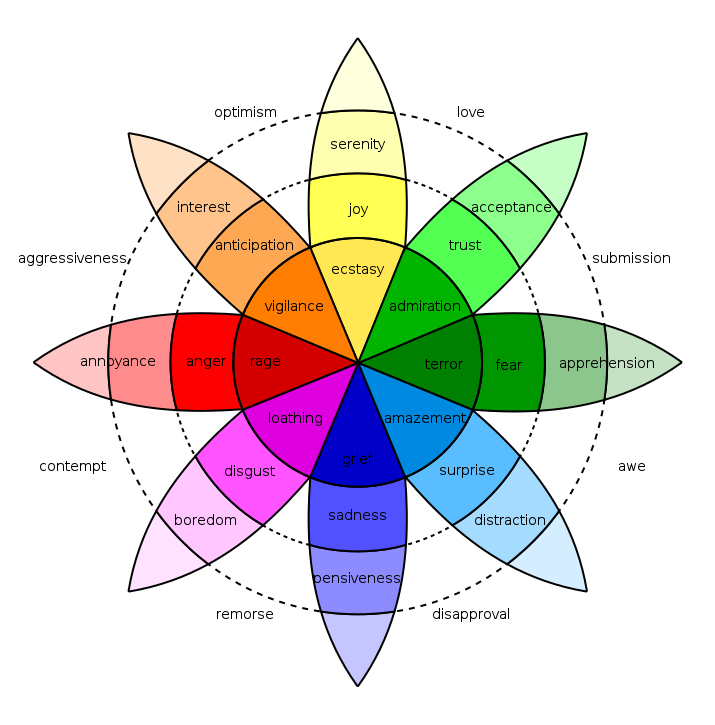
The qualities and emotions are reflective of the ideas and themes integral to the text. How they behave as individuals and collectives is key to understanding what is happening in the text. Proctor’s moral courage, Billy’s determination, the Kearney brothers’ vulnerability, and Shylock’s pride demonstrate the spectrum of human emotion and decision-making, allowing responders to engage empathetically with both individual and collective experiences.
b. Anomalies, paradoxes and inconsistencies in human behaviours and motivations
Now that we understand the first aspect of the Common Module rubric, the second point is slightly less intuitive.
Anomalies refers to what is abnormal or stands out from others, relating this to Part A it tends to be shown in texts through individual actions which differ from the broader collective. For example, in Billy Elliot, Billy pursuing ballet is seen as an anomaly in a traditionally masculine environment, challenging gender norms and societal expectations.
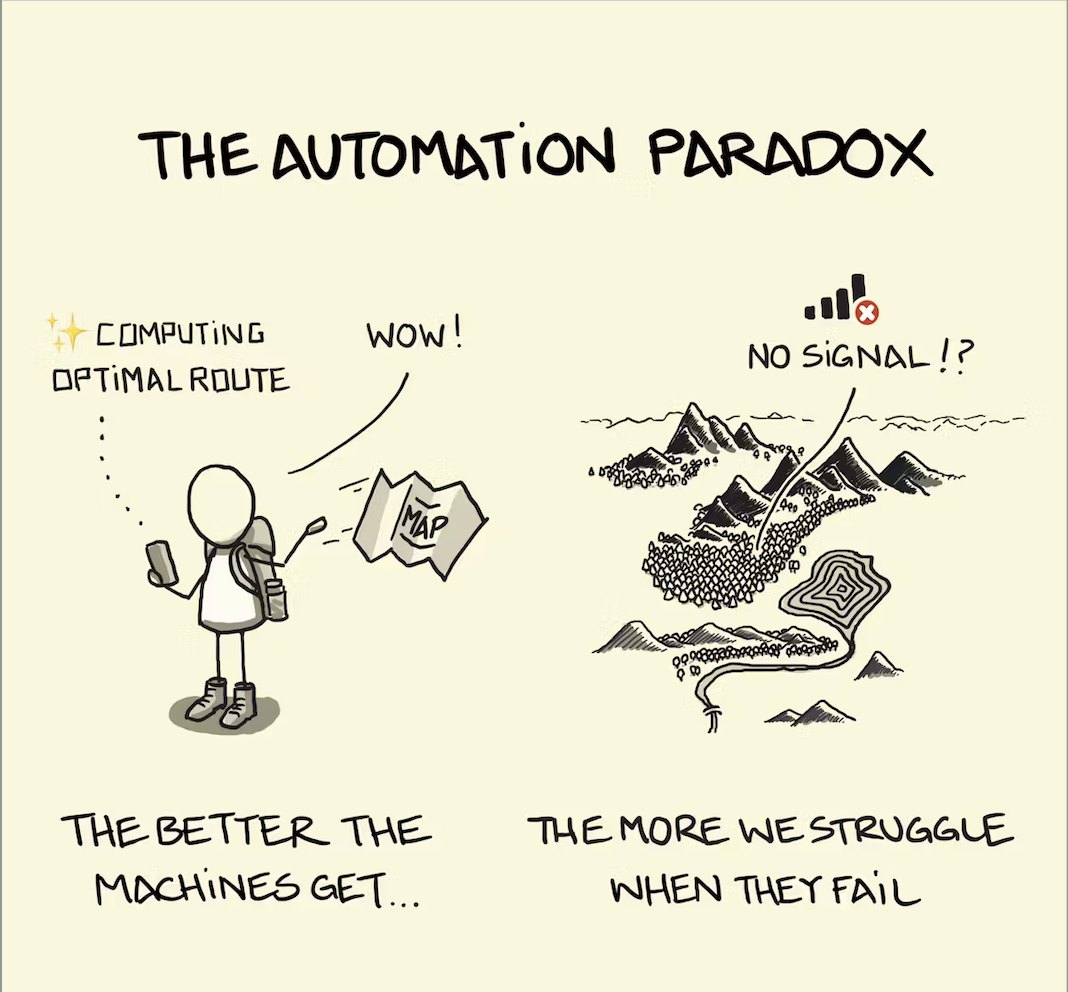
Paradoxes are demonstrated through what is seemingly contradictory or hypocritical, these actions mask intentions that reveal deeper values and ideas within the story. In The Merchant of Venice, Antonio appears generous and merciful to his friends, yet harsh and intolerant toward Shylock, highlighting societal hypocrisy and the tension between law and morality.
Inconsistencies are often seen on a broader scale across the whole story, as behaviours and motivations change overtime. Inconsistencies in a character often imply that a transformation has taken place, characters emerge with new beliefs and actions different from a prior identity, and can signal a turning point or emotional crisis. For example, in The Crucible, Elizabeth Proctor initially appears distant and rigid, her behaviour reflecting a sense of moral rectitude and emotional restraint, especially in her interactions with John. However, as the play progresses, her motivations shift: she shows vulnerability, compassion, and ultimately moral courage. This change is particularly evident when she lies to protect John, an action that contradicts her earlier emphasis on honesty.
c. How texts invite the responder to see the world differently, challenge assumptions, ignite new ideas, or reflect personally
In realising the presence of these categories in the text, the next step is to then question what the author’s purpose and/or intention is in incorporating these human experiences into the text. The Crucible challenges readers to question the consequences of mass hysteria, conformity, and the abuse of power, prompting reflection on historical and contemporary societal scapegoating, whilst Billy Elliot invites audiences to reconsider rigid gender expectations and societal barriers to self-expression.
A good approach to doing so is by considering the social, political, and cultural context surrounding the time when the author wrote the text. By realising why specific ideas are incorporated, your analysis becomes more flexible in answering a variety of questions.

3) Conclusion
When approaching your texts, it is essential to keep in mind the aspects that are important (ie the rubric words), which can be asked in essay questions, so that your preparation becomes centred and purposeful.
Moving forward with your Common Module preparation and further modules, consolidate your understanding through the rubric first, so that the analysis you have is relevant towards potential questions and keywords.
Need some help understanding the Common Module rubric?

We’ve got an incredible team of English tutors at Pinnacle Learners!
Whether you’re studying the Common Module for the first time or cramming before HSC and trials, we’ll help you understand the key words to strengthen your essay writing and build the confidence to ace your next assessment.
Our one-on-one lessons are available online or in person at our office in Rozelle, giving students across Sydney’s Inner West (Balmain, Leichhardt and beyond) the support they need to excel.
Over the years, our students have boosted their results by 20% or more through expert guidance, proven strategies, and mentoring that goes beyond the textbook.